info@footandankleunit.co.za | +27 11 647 3735 | +27 11 485 1974 | +27 11 647 3435
PATHOLOGIES
MIDFOOT AND HINDFOOT CONDITIONS
Cavovarus Foot
What is it?
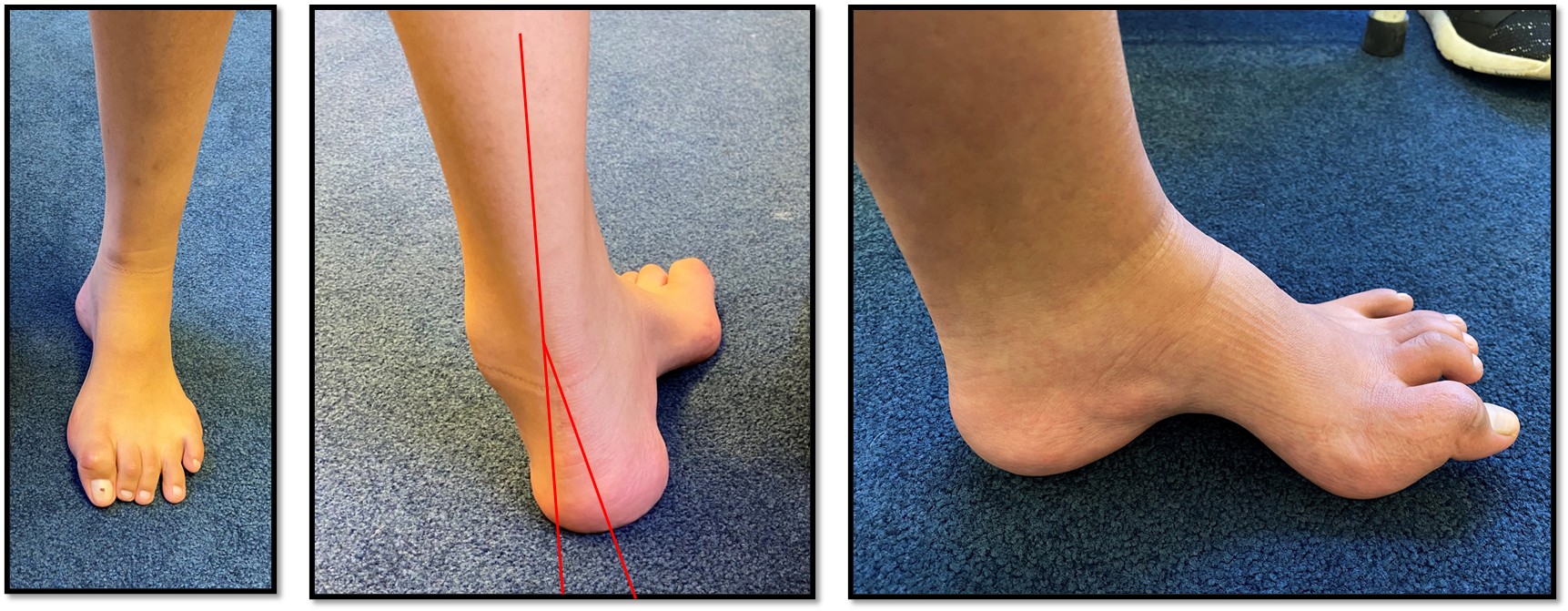
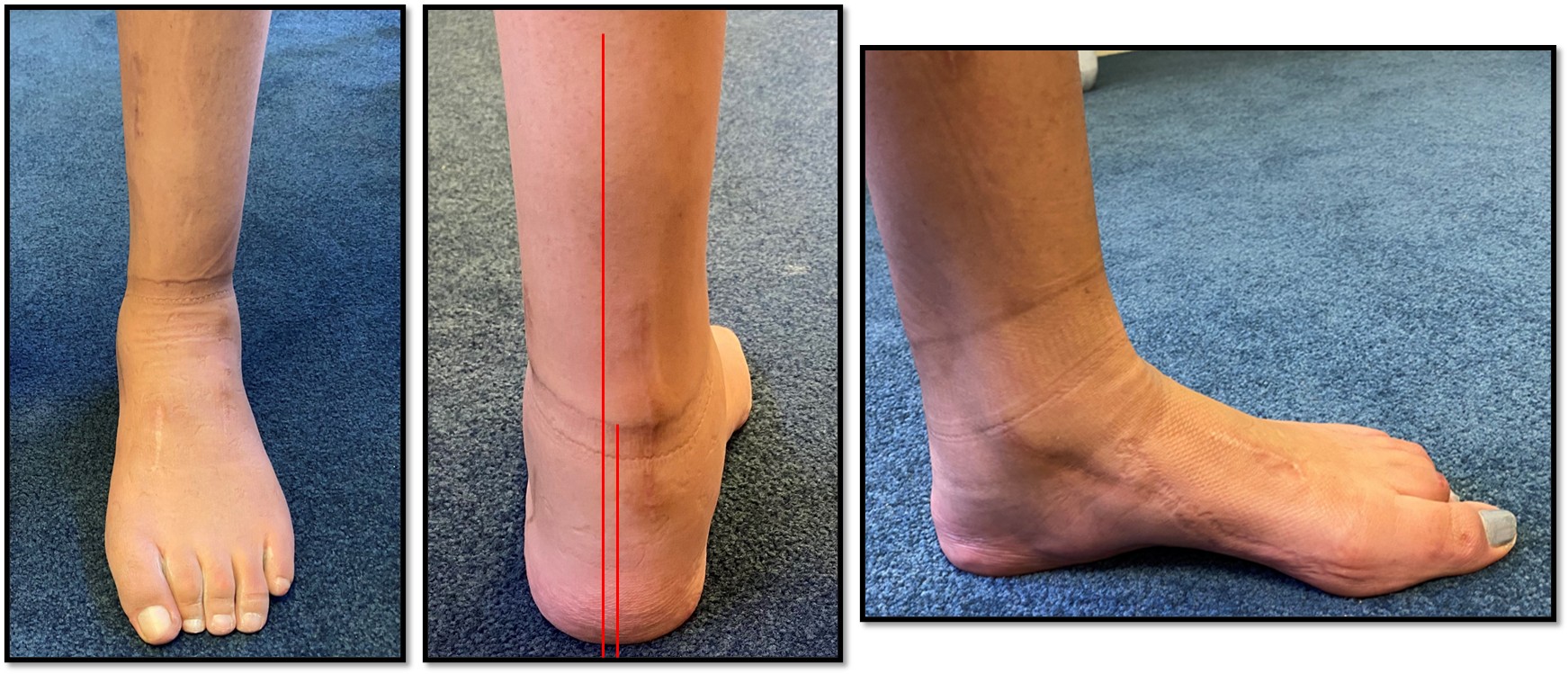
Cavovarus foot is a condition where the foot has a high arch (cavus) combined with an inward heel tilt (varus). This causes excessive weightbearing on the outer side of the foot and reduced shock absorption. It can affect one or both feet and is often progressive.
Key Features
- High medial longitudinal arch (instep appears raised)
- Heel tilts inward (hindfoot varus)
- Forefoot may be plantarflexed, especially the first ray
- Toes may become clawed due to muscle imbalance
CAUSES
- Often related to neuromuscular conditions:
- Charcot-Marie-Tooth disease (most common)
- Polio, spinal cord injuries, or muscular dystrophies
- May be congenital or acquired during adolescence or adulthood
- Arthritis, Trauma
- In some cases, the cause is idiopathic (no identifiable underlying disorder)
SYMPTOMS
- Pain along the lateral (outer) border of the foot
- Recurrent ankle sprains due to unstable alignment
- Calluses or pressure points on the heel, 5th metatarsal, and toes
- Clawed toes or hammertoes
- Difficulty fitting into standard shoes
- Progressively worsening deformity if untreated
- May develop stress fractures along the outer border of the foot
- The outside tendons (peroneal) may be affected
DIAGNOSIS
- Clinical examination: High arch, heel varus, weak peroneal muscles, claw toes
- Coleman block test: Assesses flexibility of hindfoot deformity
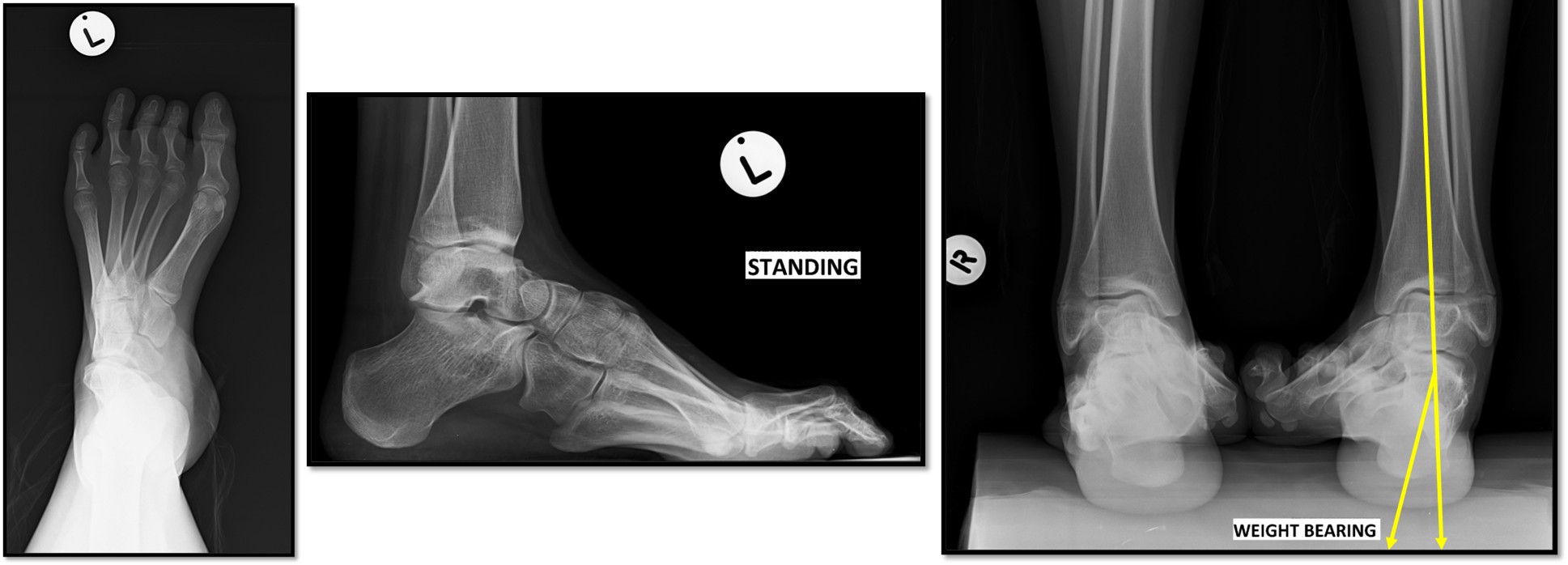
- X-rays: Show cavus arch, hindfoot varus, plantarflexed 1st ray
- MRI or nerve studies: May be needed if a neurologic cause is suspected
- Ultrasound to assess the condition of the peroneal tendons
TREATMENT OPTIONS
Non-Surgical
- Custom orthotics with lateral posting and arch support
- Ankle braces (AFOs) if instability is present
- Physical therapy to improve balance and strength
- Activity modification and footwear adaptation
Surgical (for rigid or progressive deformities)
- Soft tissue procedures (e.g., plantar fascia release, tendon transfers)
- Osteotomies (to realign the heel and forefoot)
- Fusion (arthrodesis) for severe or arthritic cases
PROGNOSIS
- Early, flexible deformities can often be managed conservatively
- Rigid or progressive cavovarus feet usually require surgery for long-term relief and function
- Identifying and managing any underlying neuromuscular condition is essential