info@footandankleunit.co.za | +27 11 647 3735 | +27 11 485 1974 | +27 11 647 3435
PATHOLOGIES
ANKLE CONDITIONS
Talus Fracture
What is it?
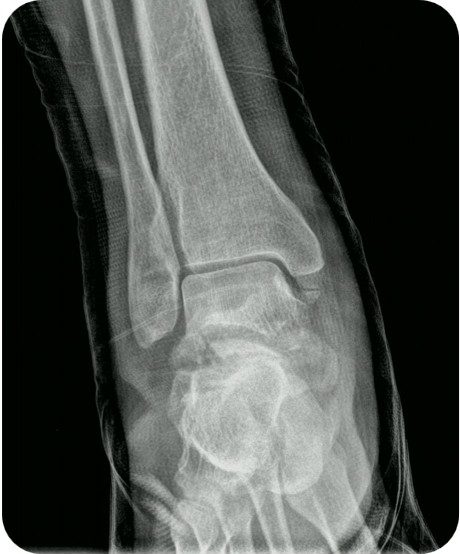
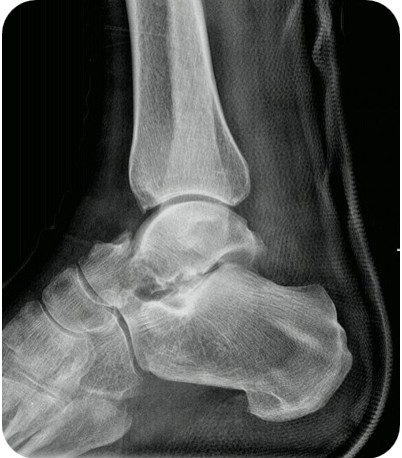
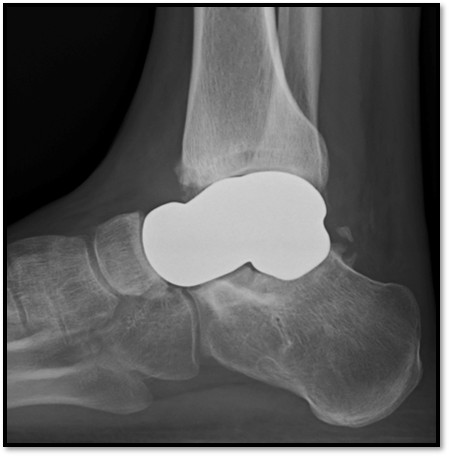
A talus fracture refers to a break in the talus bone, which is a key bone in the ankle joint that sits between the tibia (shin bone) and calcaneus (heel bone). The talus is essential for proper foot movement and helps transmit weight from the leg to the foot. Talus fractures are relatively rare but can occur due to high-impact trauma, such as falls or accidents.
These fractures are serious because they can disrupt the normal function of the ankle joint, potentially leading to complications such as arthritis or long-term disability if not treated appropriately.
Types
Talus fractures are classified based on their location and the extent of the injury:
- Lateral Process Fracture: A break in the lateral process of the talus, which is the outer part of the talus bone.
- Neck Fracture: A break in the neck of the talus, which is the narrower part of the bone just in front of the body of the talus. This type of fracture can impact blood flow to the talus, leading to complications.
- Body Fracture: A fracture that involves the main body of the talus bone, which is the central part of the bone. These fractures are often associated with dislocations of the ankle joint.
- Posterior Process Fracture: A break in the posterior process of the talus, located at the back of the bone.
- Comminuted Fracture: The talus is broken into several pieces, which may involve multiple areas of the bone.
- Stress Fracture: A small crack in the talus that develops over time due to repetitive stress, typically seen in athletes.
CAUSES
Talus fractures are commonly caused by:
- High-energy trauma: Falls from a height, motor vehicle accidents, or sports injuries involving high-impact force can result in a talus fracture.
- Twisting injuries: Sudden, forceful twisting or rolling of the ankle, especially during activities like skiing, soccer, or basketball.
- Direct trauma: A direct blow to the ankle, such as from a heavy object falling onto the foot.
- Chronic stress: In rare cases, stress fractures in the talus can occur due to repetitive loading, particularly in athletes who engage in activities that place a lot of strain on the ankle.
SYMPTOMS
Symptoms of a talus fracture typically include:
- Severe pain: Intense pain in the ankle, particularly when attempting to move the foot or bear weight on the affected side.
- Swelling and bruising: Significant swelling around the ankle and bruising that may spread over the top of the foot or up the leg.
- Limited movement: Difficulty moving the ankle or foot, often accompanied by a feeling of instability or weakness.
- Tenderness: Tenderness and sensitivity when touching the injured area, especially over the talus bone itself.
- Deformity: In severe fractures, the foot may appear deformed or in an abnormal position.
DIAGNOSIS
To accurately diagnose a talus fracture, the following methods are commonly used:
- Physical examination: The doctor will assess the ankle for signs of deformity, tenderness, and swelling, as well as evaluate the patient’s ability to move the foot and bear weight.
- X-rays: X-ray imaging is the first-line diagnostic tool used to visualize the fracture and determine its location. Multiple angles may be taken for a more comprehensive view.
- CT scan: For complex fractures, a CT scan may be used to get a detailed image of the bone fragments and joint involvement, especially for fractures of the talus body or neck.
- MRI: If there is concern about damage to soft tissues, ligaments, or cartilage, an MRI can provide additional information.
TREATMENT OPTIONS
Non-Surgical Treatment:
For non-displaced or minor talus fractures, the treatment may involve:
- Rest and immobilization: The ankle will typically be immobilized with a cast or boot to prevent movement and allow the bone to heal.
- Non-weight bearing: The patient will likely be advised to avoid putting weight on the injured foot for several weeks to promote healing.
- Ice and elevation: Applying ice to the ankle to reduce swelling and elevating the foot to reduce inflammation can help in the early stages.
- Pain management: Over-the-counter pain medications (e.g., NSAIDs) can be used to manage pain and swelling.
- Physical therapy: Once the fracture has healed, rehabilitation exercises will help restore strength, flexibility, and range of motion to the ankle joint.
Surgical Treatment:
For displaced fractures, fractures involving the neck of the talus, or comminuted fractures, surgery may be necessary:
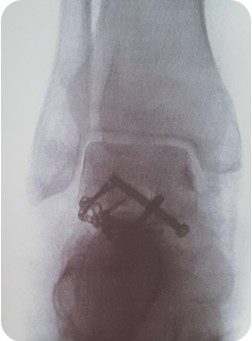
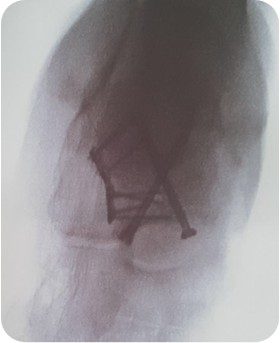
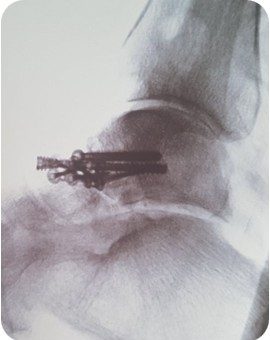
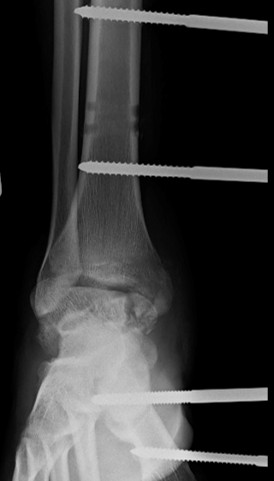
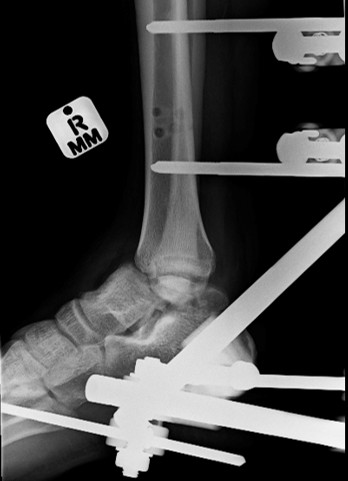
- Open reduction and internal fixation (ORIF): This procedure involves realigning the broken bone and securing it in place using plates, screws, or pins. This is a common treatment for displaced talus fractures.
- Arthroscopy: In some cases, arthroscopic surgery may be used to assess and treat joint damage or remove bone fragments.
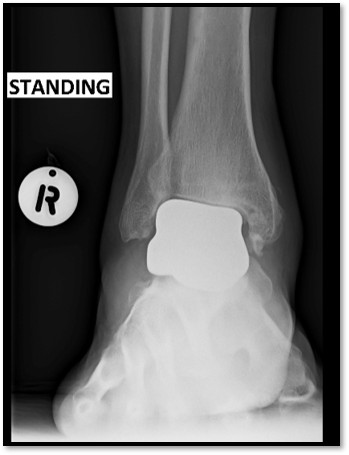
- Fusion: If the talus is severely damaged or if arthritis develops in the joint, joint fusion may be performed to stabilize the ankle.
- Bone grafting: In severe cases, bone grafts may be required to stimulate healing in the talus if the bone has been significantly damaged.
RECOVERY AND REHABILITATION
- Initial healing: After surgery or non-surgical treatment, the talus usually takes 6-12 weeks to heal, during which the ankle may be immobilized to prevent further injury.
- Weight-bearing restrictions: Weight-bearing may be restricted during the first few weeks of healing to protect the injured bone. Crutches or a walker may be needed for mobility.
- Physical therapy: Once the fracture has healed, physical therapy is essential to restore strength, mobility, and function to the ankle. This may involve exercises to improve range of motion, strengthen muscles, and increase flexibility.
- Long-term care: After recovery, it may take several months to regain full function and return to normal activities, particularly high-impact activities like running or sports.
PROGNOSIS
- Good recovery with treatment: With proper treatment, most talus fractures heal well, although recovery can take several months. The prognosis largely depends on the type and severity of the fracture.
- Possible complications: If not treated properly, talus fractures can lead to complications such as avascular necrosis (loss of blood supply to the talus), arthritis in the ankle joint, or long-term pain and instability.
- Chronic issues: In severe cases or when treatment is delayed, patients may experience ongoing problems with foot function, including limited range of motion, instability, or chronic pain.