info@footandankleunit.co.za | +27 11 647 3735 | +27 11 485 1974 | +27 11 647 3435
PATHOLOGIES
TENDON AND SOFT TISSUE CONDITIONS
Non-Insertional Achilles Tendonitis
What is it?
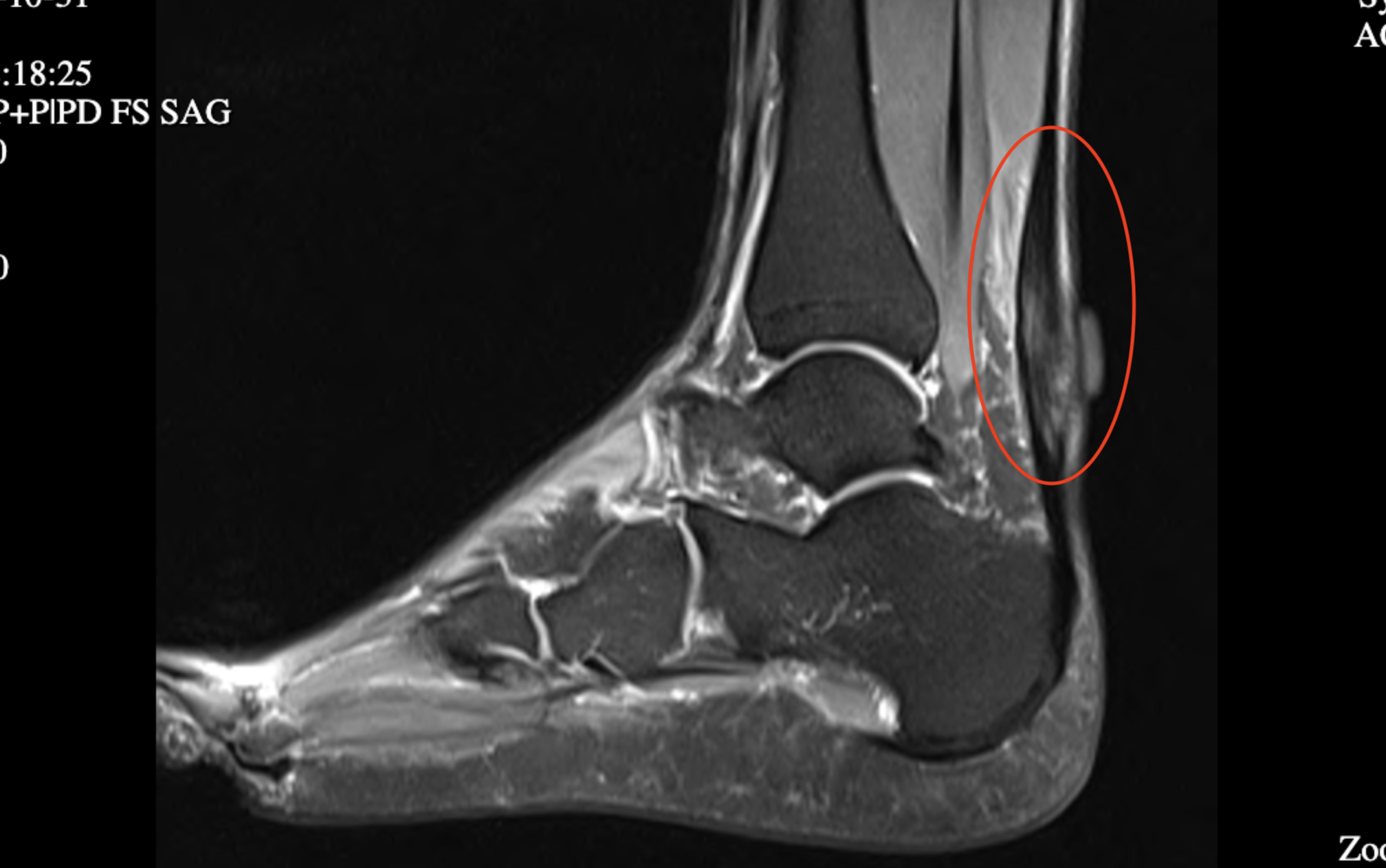
Non-insertional Achilles tendonitis refers to inflammation, degeneration, or microscopic tears in the middle portion of the Achilles tendon, the large tendon at the back of the lower leg. This condition typically affects athletes or active individuals who perform repetitive activities involving the Achilles tendon, such as running, jumping, or hiking. Unlike insertional tendonitis, which affects the tendon where it attaches to the heel bone, non-insertional tendonitis involves the body of the tendon itself.
CAUSES
- Overuse: Repeated stress on the tendon, particularly from high-impact activities like running, jumping, or explosive movements
- Sudden increase in activity: Starting a new exercise program or increasing intensity too quickly
- Tight calf muscles or lack of flexibility, which places extra strain on the tendon
- Improper footwear or inadequate cushioning, particularly for high-impact sports
- Age-related degeneration: As we age, the tendon becomes less resilient and more prone to injury
SYMPTOMS
- Pain and tenderness along the back of the ankle, about 2–6 cm above the heel
- Swelling in the middle portion of the tendon
- Stiffness or tightness, particularly in the morning or after activity
- Pain with activity: Especially during running, jumping, or activities requiring pushing off with the foot
- Thickening of the tendon over time, especially in chronic cases
DIAGNOSIS
- Clinical exam: Tenderness, swelling, and decreased range of motion in the tendon
- Thompson test: To rule out a complete Achilles tendon rupture
- Ultrasound or MRI: Helps evaluate tendon degeneration, tears, or fluid accumulation
- X-rays: May be used to rule out bone-related issues, but tendon damage is better assessed with soft-tissue imaging (ultrasound or MRI)
TREATMENT OPTIONS
Non-Surgical
- Rest: Reducing or modifying activity to avoid aggravating the tendon
- Ice therapy: To reduce inflammation and pain after activity
- NSAIDs: Anti-inflammatory medications to relieve pain and swelling
- Heel lifts or orthotics: To reduce tension and stress on the Achilles tendon
- Physical therapy: Focus on eccentric strengthening exercises, which have been shown to aid tendon healing and improve strength
Surgical
- Surgery is usually considered for severe cases that do not respond to conservative treatments over 6–12 months
- Debridement or repair: Removal of degenerated tendon tissue or, in rare cases, surgical repair of partial tears
PROGNOSIS
- Most cases of non-insertional Achilles tendonitis respond well to non-surgical treatment and physical therapy, with gradual recovery over several months
- Surgery is rare and typically reserved for severe or chronic cases
- Adequate rehabilitation and avoiding overuse are key to preventing recurrence
- Physiotherapy for an eccentric exercise programme.
- There is NO place for cortisone injections into the tendon
- Platelet Rich Plasma (PRP) injections have not shown to be effective