info@footandankleunit.co.za | +27 11 647 3735 | +27 11 485 1974 | +27 11 647 3435
PATHOLOGIES
TENDON AND SOFT TISSUE CONDITIONS
Achilles Tendon Ruptures: Acute & Chronic
What is it?
An Achilles tendon rupture occurs when the Achilles tendon — the strong, fibrous tissue that connects the calf muscles (gastrocnemius and soleus) to the heel bone — is partially (rare) or completely torn. The rupture can result from sudden movements or repetitive strain, often during activities such as running, jumping, or pivoting.
Types
There are two main types of Achilles tendon ruptures:
- Acute Achilles Tendon Rupture: A sudden, traumatic tear that occurs at the time of injury.
- Chronic Achilles Tendon Rupture: A long-standing rupture that occurs after untreated or poorly managed tendon injuries, leading to degeneration and eventual rupture.
CAUSES
Acute Rupture:
- Sudden, forceful movement: Quick starts, stops, or changes in direction (common in sports like basketball, tennis, or soccer)
- Direct trauma: A sudden blow or impact to the Achilles tendon can cause it to rupture
- Weakness in the tendon: If the tendon has been weakened by previous injuries or overuse, it is more susceptible to rupture
Chronic Rupture:
- Untreated tendinopathy: Long-term tendon degeneration due to repetitive strain or chronic inflammation of the Achilles tendon, also known as Achilles tendinopathy
- Poor healing from prior injury: An untreated partial tear may progress into a full rupture over time
- Age and wear: Tendons lose elasticity with age, making them more prone to injury
- Imbalance in muscle strength: Weak calf muscles or poor flexibility may increase strain on the Achilles tendon
SYMPTOMS
Acute Achilles Tendon Rupture:
- Sudden sharp pain in the back of the ankle, often described as being kicked or struck
- Swelling around the Achilles tendon and ankle
- Inability to push off the foot or walk on tiptoe
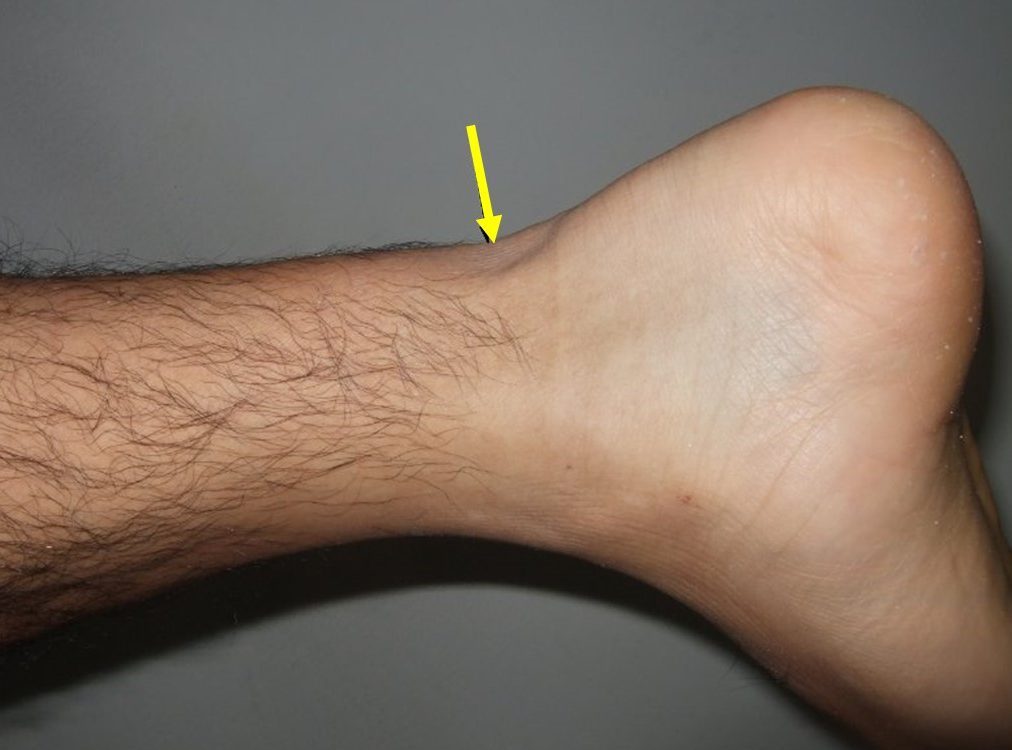
- A gap or indentation can often be felt in the tendon where the rupture occurred
- Bruising and tenderness in the affected area
Chronic Achilles Tendon Rupture:
- Persistent pain in the back of the ankle, particularly after activity
- Swelling and a feeling of stiffness in the tendon
- Limited range of motion in the ankle joint
- Weakness in the calf muscles, especially when pushing off with the foot
- Abnormal gait: Difficulty walking or running due to tendon dysfunction
DIAGNOSIS
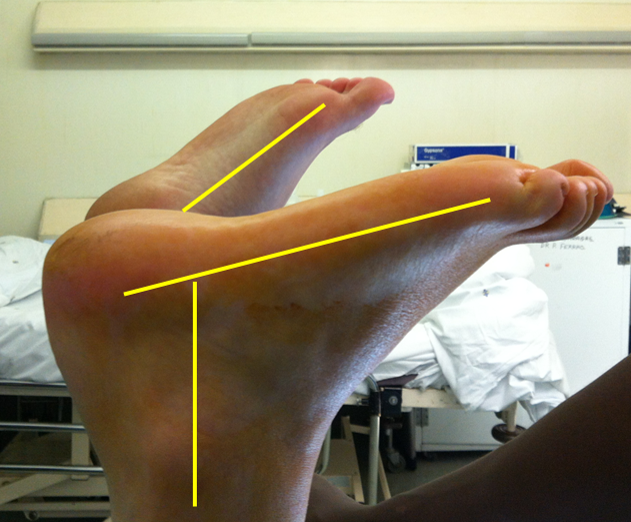
- Physical examination: A doctor will check for signs of swelling, bruising, and tenderness, and perform specific tests, such as the Thompson test, where the calf muscle is squeezed to see if the foot moves (inability to move the foot suggests a rupture)
- Ultrasound: An ultrasound can be used to visualize the tendon and detect tears (rarely necessary in the acute setting)
- MRI: An MRI provides detailed images of the tendon, helping determine the size and location of the rupture (rarely necessary in the acute setting)
- X-rays: X-rays may be used to rule out bone fractures but do not show soft tissue injuries like tendon ruptures
TREATMENT OPTIONS
Acute Rupture:
Non-Surgical Treatment:
- Rest and immobilization: The foot and ankle will be immobilized in a cast, boot, or brace to allow the tendon to heal in the proper position (if treated in the first 3-5 days)
- Physical therapy: Once the tendon is healed enough, rehabilitation exercises will be started to restore strength, flexibility, and function
- NSAIDs: Nonsteroidal anti-inflammatory drugs (e.g., ibuprofen) to manage pain and reduce swelling
Surgical Treatment:
- Surgical repair: Surgery may be necessary to reconnect the two ends of the ruptured tendon, especially in active individuals or those with significant tendon damage. The procedure involves stitching the tendon back together, sometimes with a graft if the tear is large
- Post-surgery rehabilitation: After surgery, the tendon will be immobilized in a cast or boot for several weeks, followed by physical therapy to restore function
Chronic Rupture:
Non-Surgical Treatment:
- Physical therapy: If the rupture is not severe, physical therapy can help strengthen the surrounding muscles and improve function, especially if the rupture has occurred gradually
- Orthotics: Custom insoles to help reduce strain on the tendon
- Rest and activity modification: Reducing high-impact activities to allow the tendon to heal slowly
- NSAIDs and corticosteroid injections: To reduce pain and inflammation in the tendon
Surgical Treatment:
- Tendon repair or reconstruction: In chronic cases, surgery may be needed to repair or reconstruct the tendon. This may involve removing scar tissue and reconnecting the tendon or using a tendon graft/tendon transfer to reconstruct the Achilles tendon
- Post-surgery rehabilitation: Similar to acute rupture surgery, rehabilitation will include immobilization and gradual weight-bearing exercises to restore strength and movement
PROGNOSIS
- Acute rupture: With timely treatment, either surgical or non-surgical, most people can recover full function within 6 to 12 months. However, surgery is often recommended for active individuals or those who want to return to high-impact sports.
- Chronic rupture: Recovery is more challenging for chronic ruptures because the tendon may have degenerated over time. Surgical repair can be successful, but full recovery may take longer, and rehabilitation is critical. Chronic ruptures may also result in persistent weakness and instability if not properly managed.