info@footandankleunit.co.za | +27 11 647 3735 | +27 11 485 1974 | +27 11 647 3435
PATHOLOGIES
ANKLE CONDITIONS
Ankle Arthritis
What is it?
Ankle arthritis is a condition where the cartilage lining the ankle joint wears down over time, leading to pain, stiffness, swelling, and difficulty walking. Unlike the hip or knee, ankle arthritis is less commonly due to wear-and-tear (primary osteoarthritis) and more often linked to previous injuries (secondary osteoarthritis).
CAUSES
- Post-traumatic arthritis – most common cause (e.g. after fractures, sprains, or dislocations)
- Inflammatory arthritis – such as rheumatoid arthritis or psoriatic arthritis
- Primary osteoarthritis – less common; occurs without prior injury
- Infection, gout, or avascular necrosis (less frequently)
SYMPTOMS
- Pain deep within the joint, especially with activity
- Morning stiffness or after prolonged rest
- Swelling and tenderness around the ankle
- Reduced range of motion
- Difficulty walking on uneven ground or stairs
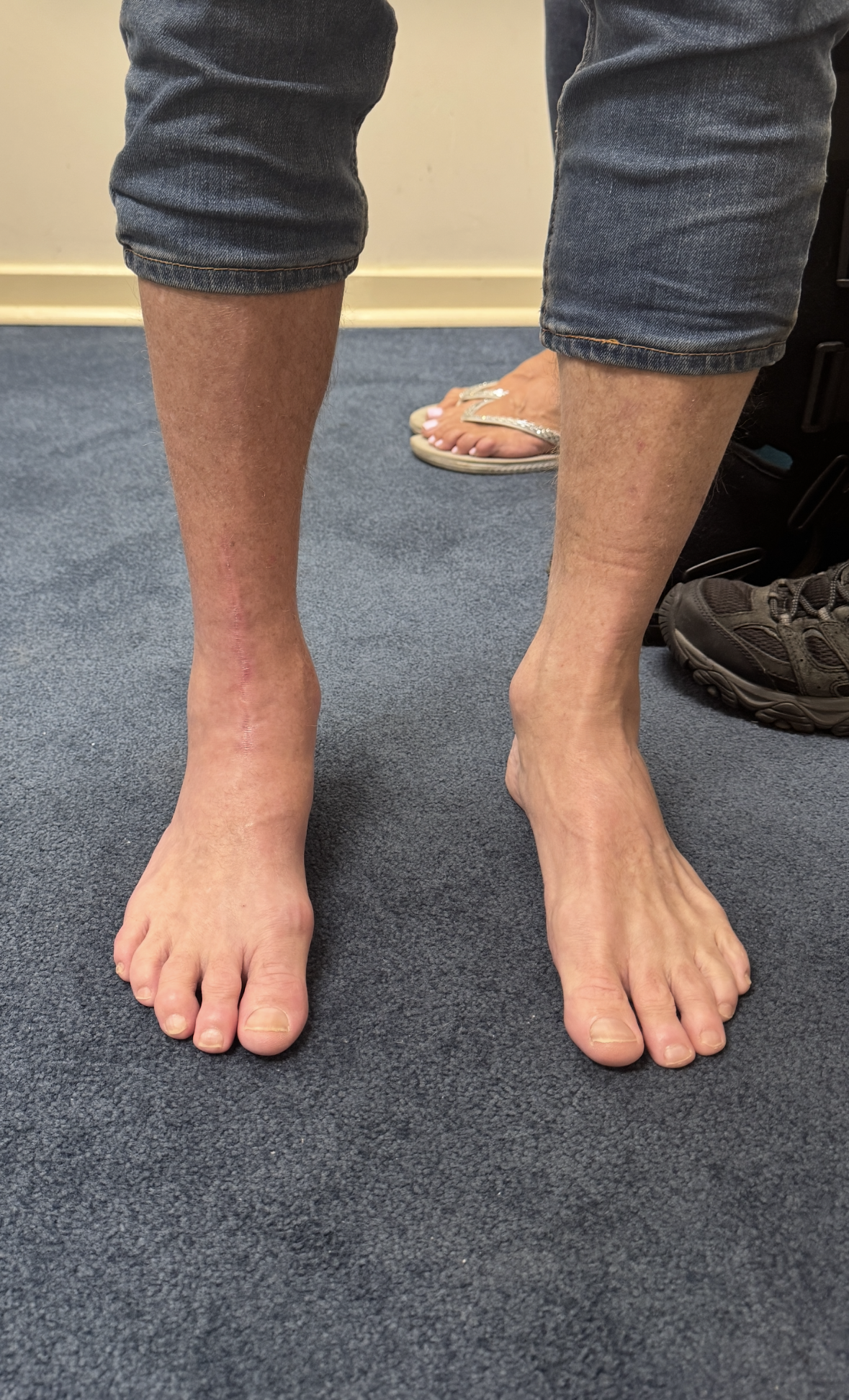
- In advanced cases, deformity or joint instability
DIAGNOSIS
- Clinical assessment: Joint tenderness, stiffness, gait changes
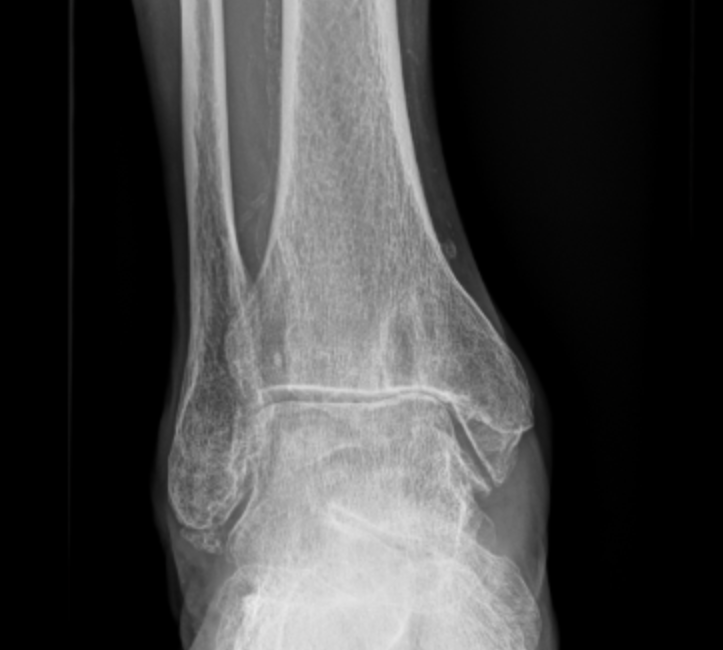
- X-rays: Show joint space narrowing, osteophytes, subchondral sclerosis, and deformity
- CT or MRI: May be used for surgical planning or to assess bone/cartilage quality
TREATMENT OPTIONS
Non-Surgical
- Activity modification and low-impact exercise
- NSAIDs or corticosteroid injections to reduce inflammation
- Physiotherapy to improve strength and mobility
- Bracing or ankle-foot orthoses (AFOs) to provide support and reduce motion
- Custom footwear with shock-absorbing soles
Surgical (for persistent or advanced cases)
- Arthroscopic debridement – for early-stage arthritis
- Supramalleolar osteotomy – re-aligns the joint in select cases
- Ankle fusion (arthrodesis) – gold standard for end-stage arthritis with good pain relief
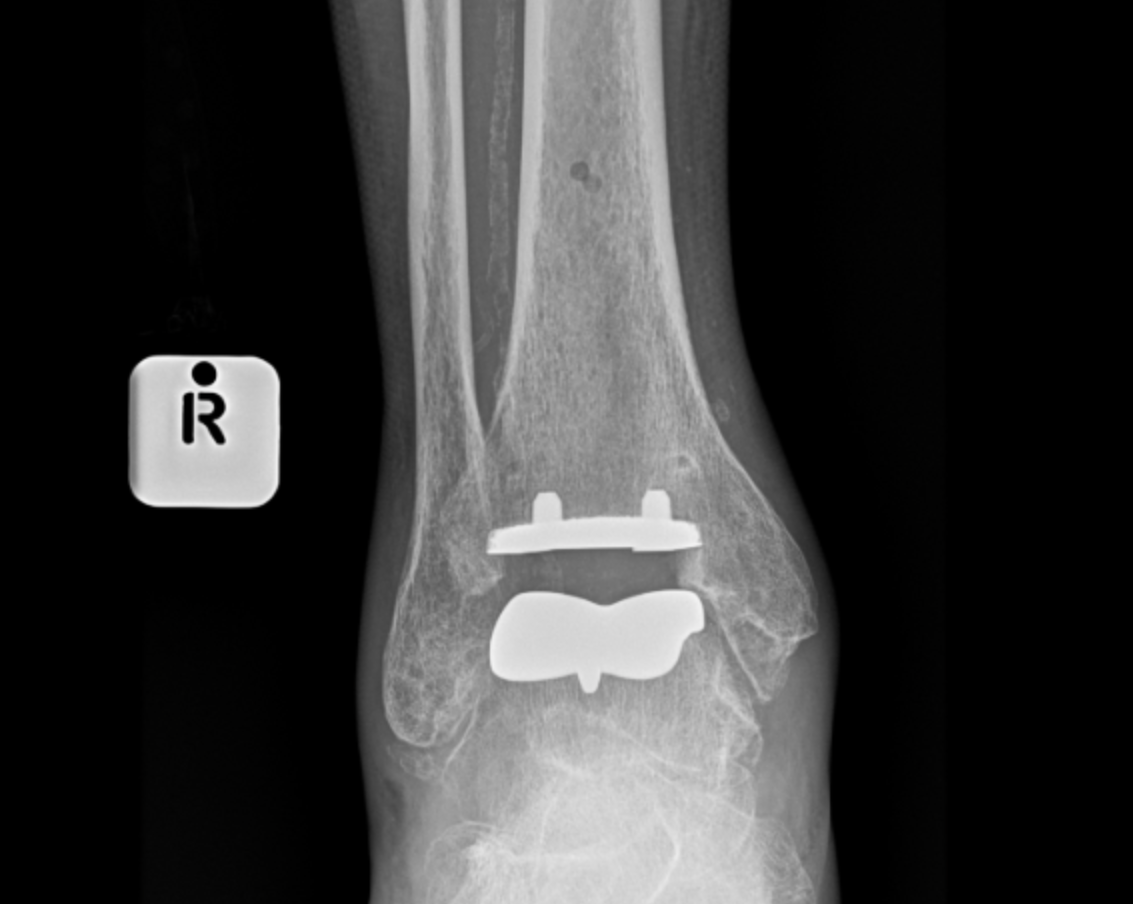
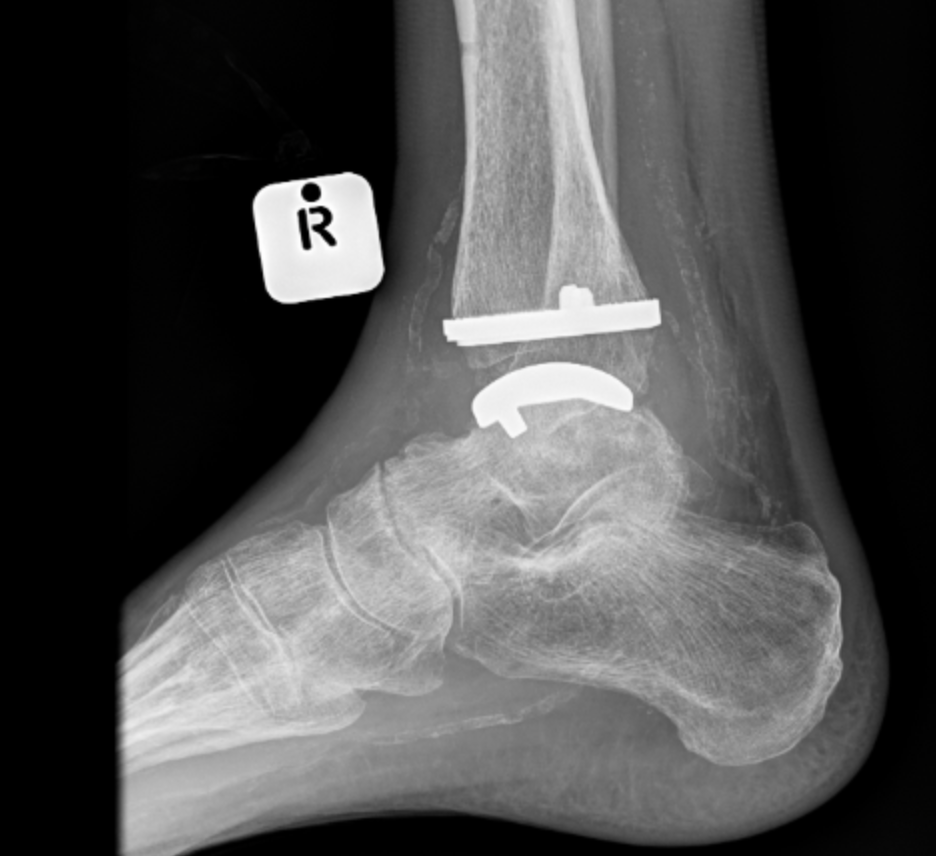
- Total ankle replacement (arthroplasty) – maintains joint motion; best suited for lower-demand patients with preserved alignment
CLASSIFICATION
Arthritis is often staged based on the amount of joint space narrowing and joint alignment, which helps guide treatment decisions.
PROGNOSIS
- Early arthritis may be well managed with conservative treatments.
- For advanced arthritis, both fusion and replacement are effective surgical options depending on patient age, activity level, and joint alignment.