info@footandankleunit.co.za | +27 11 647 3735 | +27 11 485 1974 | +27 11 647 3435
PATHOLOGIES
FOREFOOT CONDITIONS
Hallux Rigidus
What is it?
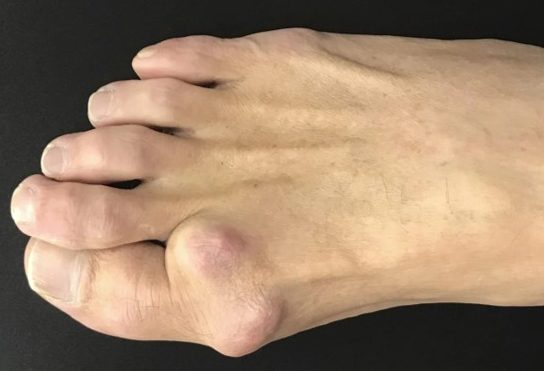
Hallux rigidus is a form of degenerative arthritis affecting the first metatarsophalangeal (MTP) joint—the joint at the base of the big toe. It causes pain and stiffness, particularly during push-off when walking. Over time, the joint loses motion and may develop a bony bump (dorsal osteophyte), limiting shoe wear and activity.
CAUSES
- Wear and tear (osteoarthritis) – most common
- Previous trauma or repetitive microtrauma to the big toe
- Anatomical variations (e.g. long first metatarsal, elevated first ray)
- Family history or inflammatory arthritis (less commonly)
SYMPTOMS
- Pain at the top of the big toe joint, especially during walking, running, or squatting
- Stiffness and loss of upward motion (dorsiflexion) of the big toe
- Swelling or a bony bump (dorsal osteophyte)
- Difficulty with shoe wear or high-impact activities
- In advanced cases: pain even at rest and altered gait
DIAGNOSIS
- Clinical examination: Limited dorsiflexion, joint crepitus, tenderness over the dorsal aspect of the joint
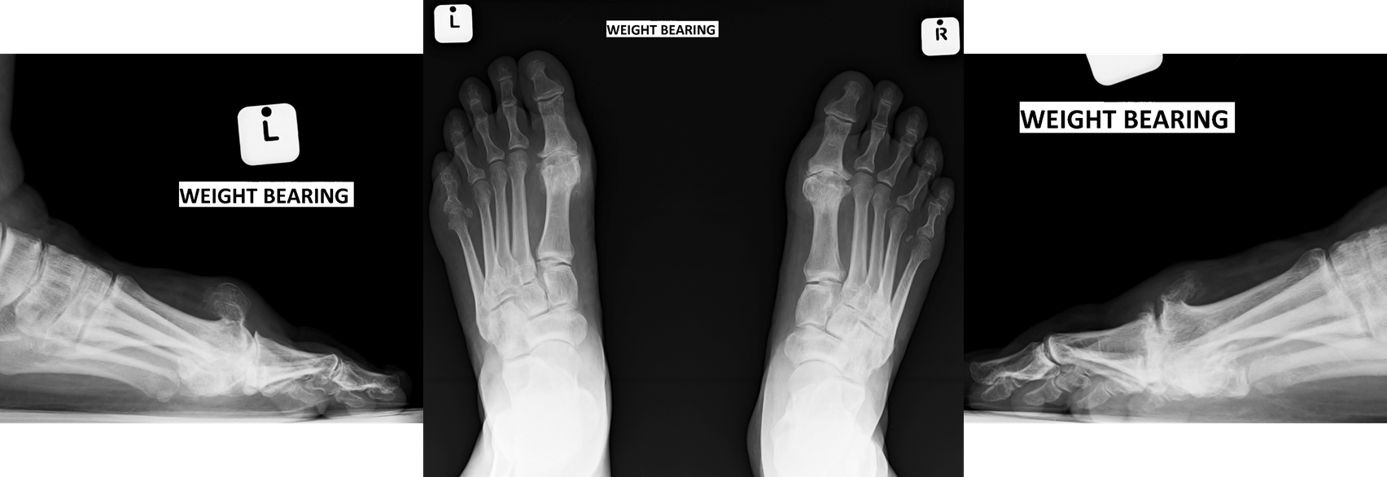
- X-rays: Show joint space narrowing, osteophyte formation, and subchondral sclerosis
TREATMENT OPTIONS
Non-Surgical
- Stiff-soled or rocker-bottom shoes
- Orthotics with a Morton’s extension to limit MTP joint motion
- NSAIDs for inflammation and pain relief
- Activity modification
Surgical
- Depends on severity and patient demands:
- Cheilectomy: Removal of dorsal bone spurs (mild to moderate cases)
- Moberg osteotomy: Elevates the proximal phalanx to improve dorsiflexion
- Hemiarthroplasty or interpositional arthroplasty: Partial joint replacement (Rare)
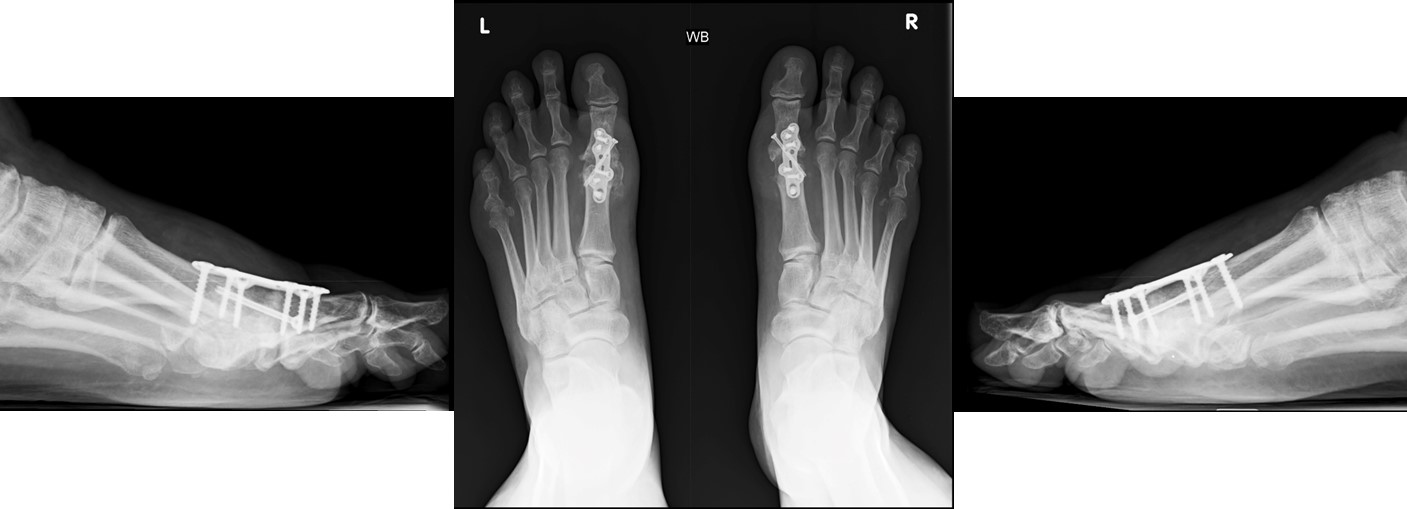
- Fusion (arthrodesis): Gold standard for severe arthritis — provides pain relief but eliminates joint motion
Excision arthroplasty (excising the joint-rare)
PROGNOSIS
- Early intervention can delay progression.
- Most patients do well with conservative treatment or surgery tailored to their activity level.
- Fusion offers predictable long-term pain relief in severe cases.