info@footandankleunit.co.za | +27 11 647 3735 | +27 11 485 1974 | +27 11 647 3435
PATHOLOGIES
MIDFOOT AND HINDFOOT CONDITIONS
Plantar Fasciitis
What is it?
Plantar fasciitis is the most common cause of heel pain. It occurs when the plantar fascia—a thick band of connective tissue running along the bottom of the foot from the heel to the toes—becomes inflamed due to repetitive stress or overuse. The condition typically causes a sharp pain in the heel, especially with the first steps in the morning or after long periods of rest.
The plantar fascia acts like a shock-absorbing ligament for the arch of the foot. When excessive strain is placed on it—such as from standing for long periods, running, or having poor foot biomechanics—it can lead to microtears, inflammation, and eventually chronic pain if left untreated.
CAUSES AND RISK FACTORS
Plantar fasciitis is usually multifactorial and largely unknown. Common causes and contributing factors include:
- Overuse: Especially in runners, athletes, or individuals who are on their feet for long hours.
- Tight calf muscles or Achilles tendon: This can increase stress on the plantar fascia.
- Foot mechanics: Flat feet, high arches, or abnormal gait can alter weight distribution.
- Improper footwear: Shoes without adequate arch support or cushioning increase risk.
- Obesity: Excess weight places additional strain on the plantar fascia.
- Age: More common in people between 40 and 60 years old.
SYMPTOMS
- Sharp, stabbing heel pain, especially:
- With the first steps in the morning
- After sitting or resting for long periods
- After exercise (not typically during)
- Tenderness at the underside of the heel
- Tightness in the arch or along the bottom of the foot
- Stiffness in the foot, especially after rest
DIAGNOSIS
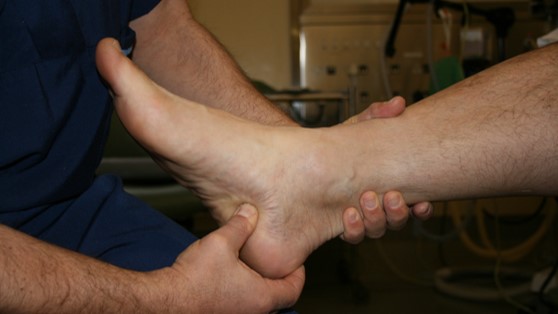
Plantar fasciitis is typically diagnosed based on clinical history and physical examination. Key findings include:
- Localized tenderness at the medial plantar heel
- Pain that worsens with dorsiflexion of the toes (stretching the fascia)
- X-rays may be used to rule out other conditions (e.g., fractures, heel spurs)
- Ultrasound or MRI can confirm thickening or degeneration of the fascia in unclear or chronic cases
TREATMENT OPTIONS
Non-Surgical (First-line):
Over 90% of patients improve with non-operative treatment. Common strategies include:
- Rest and activity modification: Avoid high-impact activities.
- Stretching exercises: Especially of the plantar fascia and calf muscles.
- Ice application: To reduce inflammation.
- Orthotics or heel cushions: Custom or over-the-counter arch supports.
- Night splints: To keep the fascia stretched overnight.
- Anti-inflammatory medication (NSAIDs): To reduce pain and swelling.
- Physical therapy: Focused on stretching, strengthening, and soft tissue techniques.
Additional Interventions:
- Corticosteroid injections: Provide short-term relief but carry a risk of fascia rupture if overused.
- Extracorporeal shockwave therapy (ESWT): Non-invasive option that stimulates healing in chronic cases.
- Platelet-rich plasma (PRP): Emerging evidence supports use in chronic, refractory cases.
Surgical (Reserved for persistent cases >6–12 months):
- Plantar fascia release: A small portion of the fascia is surgically released to reduce tension.
- Endoscopic or open approach may be used depending on the case.
- Surgical outcomes are generally good but are considered a last resort.
PROGNOSIS
- Most people recover fully within 6–12 months of conservative treatment.
- Early intervention and consistent stretching are key to preventing recurrence.
- Without treatment, chronic pain can lead to altered gait, secondary foot, knee, or hip issues.